- TEXAS FLOOD DAMAGE INSURANCE CLAIMS
Flood Damage Insurance
Claims in Texas
- When the Water Recedes, The Damage Remains.
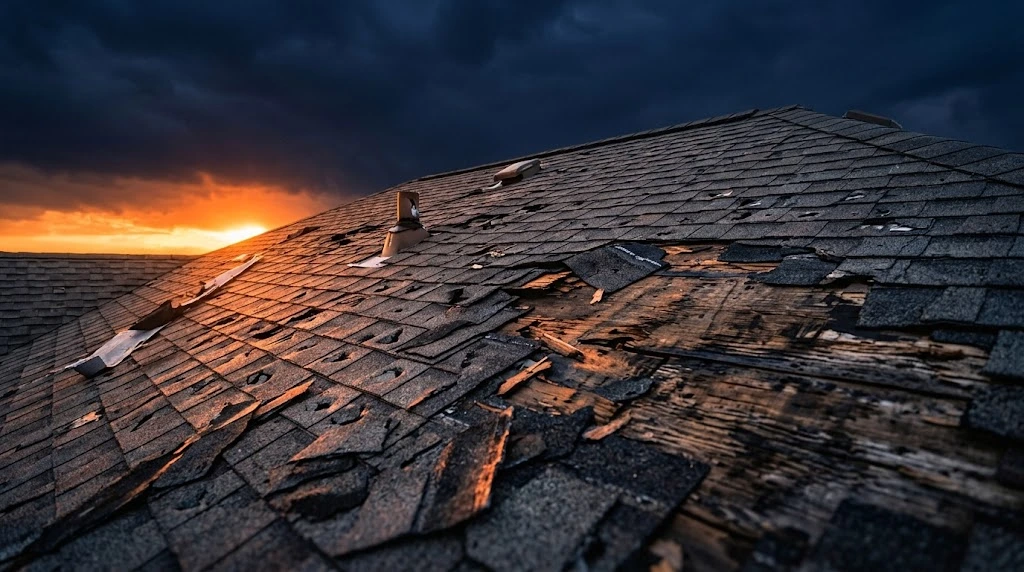
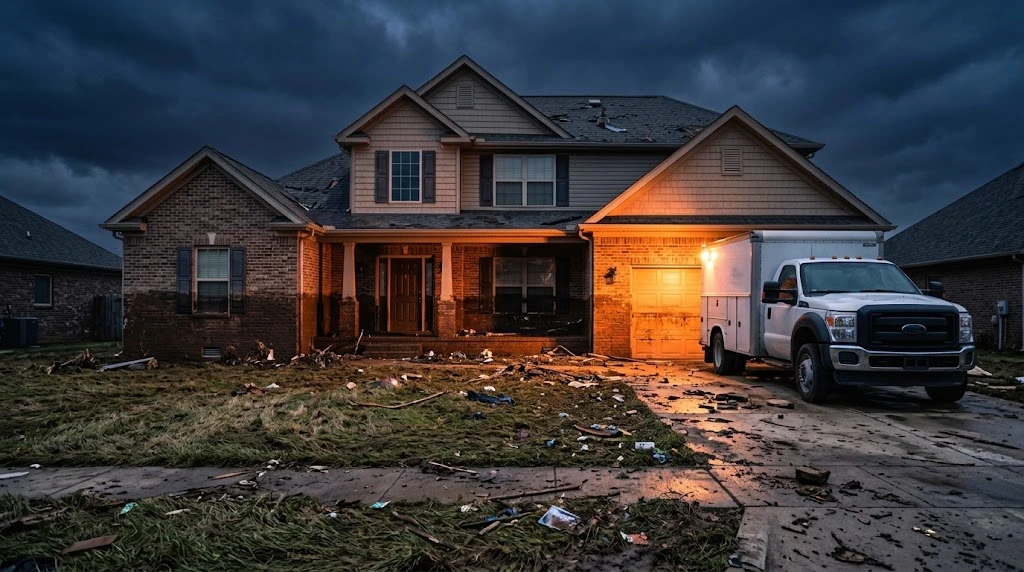
Flooding can cause extensive damage to homes and commercial properties, affecting structural components, flooring, insulation, electrical systems, mechanical equipment, and personal belongings.
At OUTLX Public Adjusters, we help Texas property owners evaluate flood-related damage, document their losses, review insurance estimates, and navigate the claims process.
- UNDERSTANDING FLOOD DAMAGE
Flood Damage Extends Beyond the Waterline
Floodwater can carry sediment, debris, and contaminants into a structure. Even after standing water is removed, moisture can remain within wall cavities, beneath flooring, and inside other building materials. Determining the appropriate scope of restoration requires evaluating the materials involved, the duration of exposure, and the extent of moisture migration.
Structural Components
Flooding can affect drywall, insulation, framing, subflooring, and other building materials. Restoration requirements depend on the extent of exposure and material conditions.
Flooring & Interior Finishes
Floodwater can damage tile, hardwood, laminate, carpet, cabinetry, baseboards, doors, and other interior finishes.
Mechanical & Electrical Systems
Electrical equipment, HVAC systems, water heaters, and other mechanical components may require evaluation following exposure to floodwater.
Personal Property & Contents
Furniture, appliances, electronics, clothing, and other belongings may require cleaning, restoration, or replacement.
- FLOOD DAMAGE VS. WATER DAMAGE
Understanding the Difference Matters
Floodwater can carry sediment, debris, and contaminants into a structure. Even after standing water is removed, moisture can remain within wall cavities, beneath flooring, and inside other building materials. Determining the appropriate scope of restoration requires evaluating the materials involved, the duration of exposure, and the extent of moisture migration.
Water Damage
Typically Covered Under Property Insurance
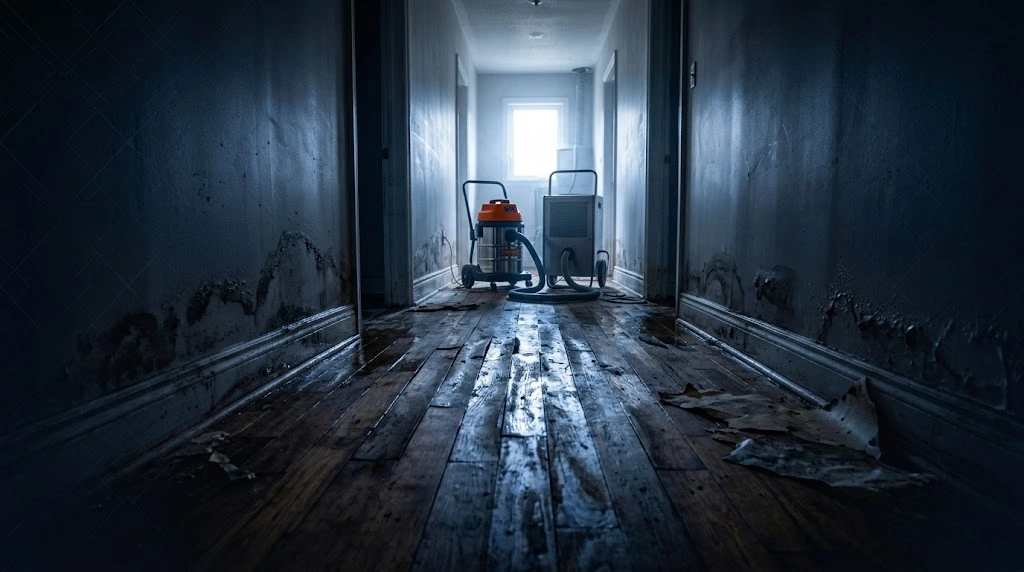
Water damage commonly involves leaks originating inside a building or entering through a damaged component. Examples include burst pipes, appliance leaks, and certain roof leaks.

Flood Damage
Typically Covered Under Flood Insurance
Flood damage generally involves the accumulation or movement of surface water over normally dry land. Examples include overflowing waterways, storm surge, and heavy rainfall.
WHY FLOOD DAMAGE CLAIMS REQUIRE THOROUGH EVALUATION
The Waterline Doesn't Always Tell the Entire Story
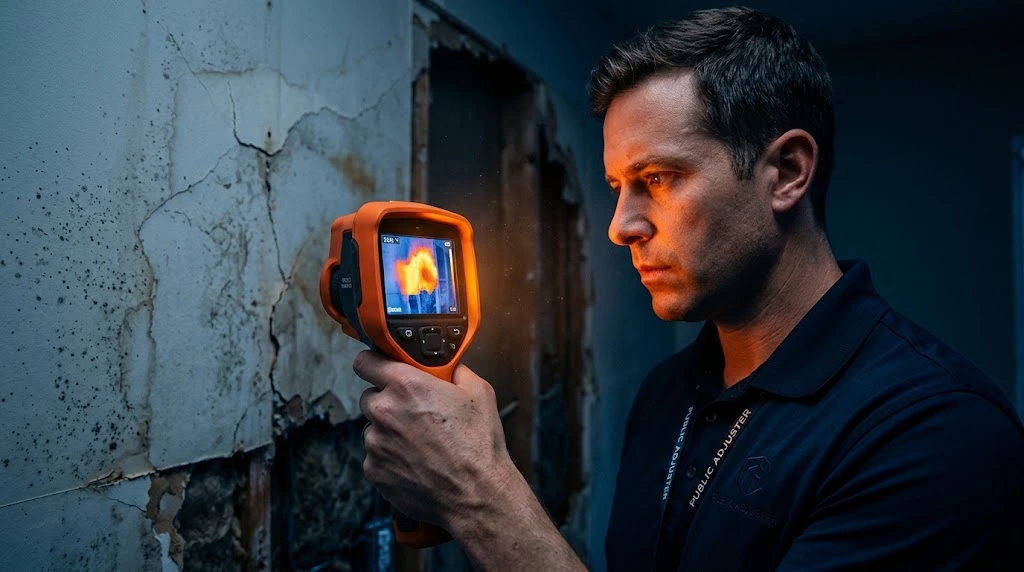
Visible Flood Damage — Waterline on walls and affected finishes.
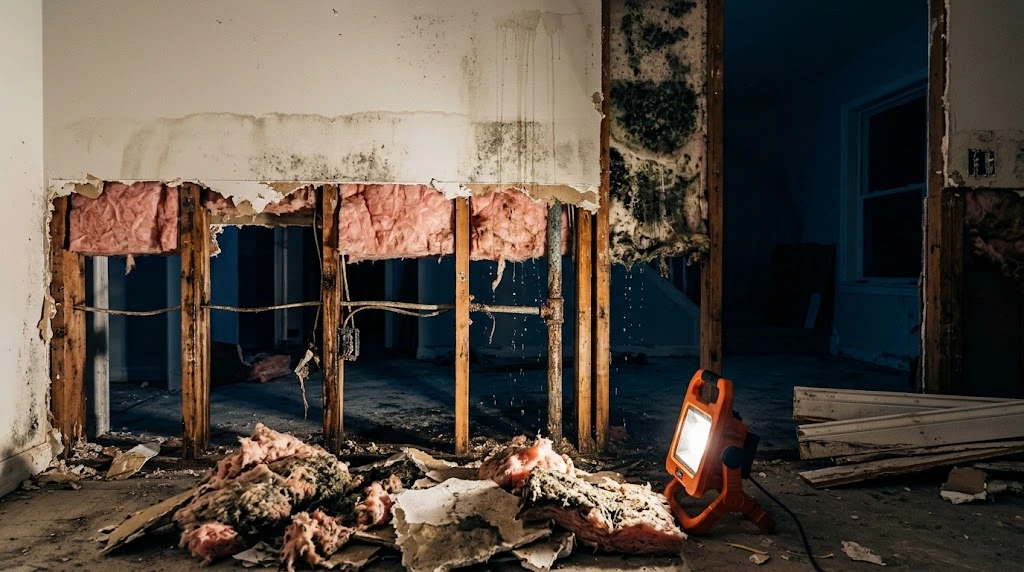
Additional Conditions — Moisture and damage discovered behind walls after demolition.
UNDERSTANDING FLOOD INSURANCE COVERAGE
Not All Flood Insurance Policies Provide the Same Protection
NFIP Flood Insurance
The National Flood Insurance Program (NFIP) provides flood insurance through participating insurers and NFIP Direct. Standard NFIP policies generally cover direct physical flood damage to eligible building and personal property, subject to policy limits, conditions, and exclusions.
Private Flood Insurance
Some property owners obtain coverage through private insurance companies. Private flood insurance policies may offer different coverage limits, exclusions, deductibles, and claim procedures. The applicable policy must be reviewed to determine the coverage available.
Common Coverage Considerations
- Building Coverage — Structural components and systems
- Contents Coverage — Personal property and equipment
- Flood Mitigation — Cleanup, drying, and restoration
- Increased Cost of Compliance — Floodplain compliance requirements
- Replacement Cost vs. ACV — Valuation provisions and depreciation
- Policy Limits & Deductibles — Coverage amounts and limitations
UNDERSTANDING FLOOD INSURANCE DEADLINES
Proper Documentation Is Only Part of the Claims Process
For claims governed by the Standard Flood Insurance Policy, a signed and sworn Proof of Loss is generally required within 60 days of the date of loss, unless FEMA has authorized an extension or waiver. NFIP policies are governed by federal requirements that can differ from standard property insurance policies. If you receive a written denial, you generally have 60 days to appeal directly to FEMA.
- Document all damages with photographs and notes.
- Maintain records of mitigation and temporary repairs.
- Meet policy deadlines and submission requirements.
- Understand the specific requirements of your flood policy.
- Seek professional assistance when needed.
RESIDENTIAL & COMMERCIAL FLOOD CLAIMS
Representing Homeowners and Commercial Property Owners

Residentialin Surance Claims
Flooding can cause extensive damage to a home, leaving homeowners uncertain about the repairs required and whether their flood insurance policy responds. OUTLX assists homeowners with documenting their losses and addressing discrepancies in insurance estimates.

Commercial Flood Damage Claims
Commercial flood losses may involve large structures, specialized equipment, electrical systems, inventories, and complex restoration requirements. OUTLX assists commercial property owners with evaluating flood-related damage and preparing detailed claim elements.
HOW OUTLX HANDLES FLOOD DAMAGE CLAIMS
A Detailed Approach to Evaluating Flood Losses
01
Property Damage Assessment
We inspect and document the reported flood damage and identify conditions that may require additional investigation.
02
Private Flood Insurance & Documentation
We prepare detailed repair estimates supported by photos, measurements, and relevant documentation.
03
Insurance Policy & Claim Review
We review the applicable flood policy, insurer findings, and estimated costs to identify discrepancies.
04
Claim Presentation & Negotiation
We present our findings and work with the insurance company to resolve disputed claim amounts.
Yes. In Texas, you can hire a public adjuster at any point during the claims process. However, it is highly recommended to hire one before you sign a final settlement or release with your insurance company. A public adjuster can review the initial estimate, identify missing damages, and negotiate on your behalf before the claim is closed.
No. A public adjuster works exclusively for you (the policyholder). They are licensed and regulated by the Texas Department of Insurance, but they are independent contractors hired to represent your best interests. An insurance company has its own "staff adjuster" or "independent adjuster" whose job is to protect the insurance company's financial interests.
No. By law, a public adjuster cannot guarantee a specific settlement amount or promise a specific outcome. Every claim is unique and subject to the terms of your policy. However, a public adjuster's goal is to ensure that all covered damages are fully identified and documented, which often results in a more accurate and higher settlement offer than the initial estimate.
Public adjusters typically work on a contingency fee basis, meaning they do not get paid unless you get paid. In Texas, the standard fee is a percentage of the final settlement amount (usually between 10% and 15%, depending on the complexity of the claim). You pay nothing out of pocket upfront.